
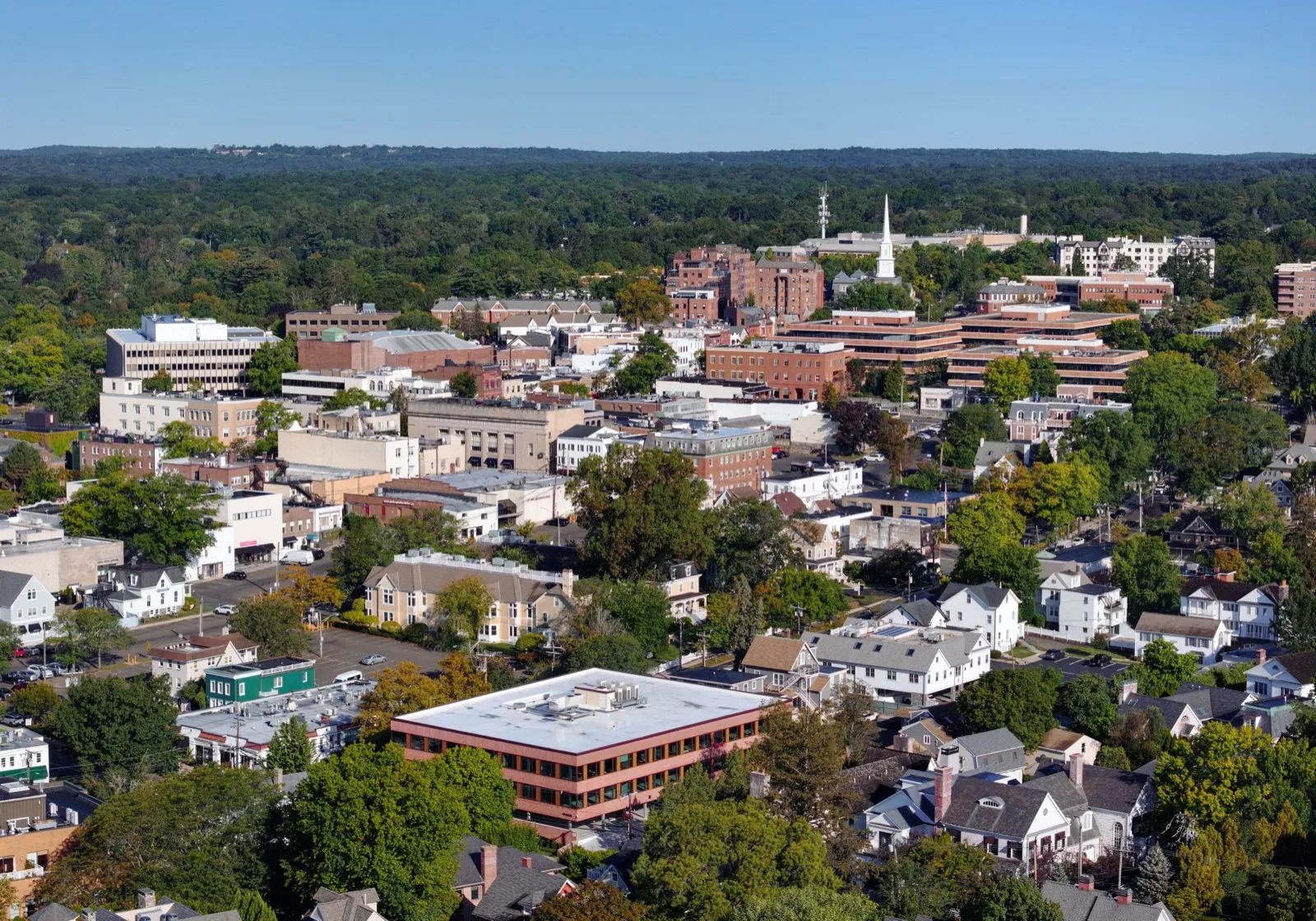
About 6 mi / 12 min from Stamford. Same-week estimates and scheduling for Greenwich, with room for faster turnaround on active water intrusion or a job that has to close before a sale.
Backcountry’s plaster problem is a settling problem
Drive the estate roads north of the Merritt Parkway and most of what you’re looking at, a Georgian with deep-set windows or a Tudor with a slate roof, was built with real lath and plaster, not drywall. That construction ages differently than a modern wall. Plaster is a rigid skin nailed over hundreds of thin wood strips, and as a house this size settles over decades, the plaster cracks along the lath lines in long, hairline patterns rather than the clean corner cracks you’d see in a newer drywall home. A homeowner who calls a generic contractor often gets a smear of joint compound over the crack, which looks fine for a few months and then telegraphs right back through the paint because nothing was done to key the patch into the surrounding plaster or address the movement underneath it. Stamford Elite Drywall treats Backcountry plaster repair as a restoration problem first: matching the existing wall’s hardness and texture, skim coating the transition so a patch doesn’t read as a patch, and being honest with the homeowner about when a section is too far gone and needs a plaster-to-drywall conversion instead of another repair. Many of these homes also predate 1978, so any repair that disturbs old paint follows EPA RRP lead-safe practices, from containment to cleanup, which a smaller crew without that certification often skips.
Waterfront exposure changes what “water damage” means here
Old Greenwich, Riverside, and Byram sit close enough to Long Island Sound that coastal storms are a real design consideration, not background weather. A roof that holds up fine on an inland street can still take on wind-driven rain during a nor’easter, and the humidity that rolls off the water in summer means a slow leak stays wet longer before anyone notices a stain. That combination is exactly what lets mold get a foothold behind the drywall or plaster before it ever shows on the surface. Stamford Elite Drywall’s approach on a waterfront call is to check moisture past the visible stain, not just paint over it, because coastal air keeps a wall assembly damp well after an inland home would have dried out. Where mold-resistant board makes sense for a bathroom, laundry area, or basement finish near the water, it gets specified up front rather than after a second callback.
What a premium Greenwich remodel actually demands from the finish
Whether it’s a kitchen addition off an Old Greenwich cottage or a full interior gut on a Backcountry estate, Greenwich’s remodel market runs on large windows, skylights, and open sightlines that show every imperfection in a wall. A Level 4 finish that looks acceptable under normal light will flash under a skylight or a bank of west-facing windows. Stamford Elite Drywall finishes these rooms to Level 5, skim coating the entire surface so light doesn’t catch a seam, and matches new construction into existing plaster where an addition ties into the original house, so the join disappears rather than announcing itself as the newer half of the room.
Neighborhoods we work in
- Backcountry Greenwich — Multi-acre estate lots, the heaviest concentration of original lath-and-plaster Georgians and Tudors in town.
- Old Greenwich — Village center near the Metro-North station and Long Island Sound, a mix of older shingled homes and waterfront rebuilds.
- Riverside — Waterfront and near-waterfront homes, similar mix of vintage plaster stock and newer high-end construction.
- Cos Cob — Older, denser housing closer to the Mianus River, working village character alongside renovated homes.
- Downtown Greenwich (Greenwich Avenue) — Retail and office core with some upper-floor residential and commercial buildout above the shops.
Why Greenwich homes need what they need
Backcountry estates hold original lath-and-plaster from the pre-war era.
Plaster ages differently than drywall: it cracks along the lath pattern and needs a skim coat that matches the existing wall's texture and hardness.
Waterfront and near-waterfront homes in Old Greenwich, Riverside, and Byram sit close to Long Island Sound.
Storm surge, roof leaks, and humid summers push moisture into ceilings and lower walls, and soft or stained board has to come out before mold takes hold.
High-end renovations and additions are common across Backcountry and the waterfront neighborhoods.
Homeowners doing a premium remodel expect a Level 5 finish with no visible seams under skylights or large window walls.
What we’re called for most in Greenwich
Local resources for Greenwich homeowners
- Town of Greenwich Building Inspection — Interior cosmetic patching is typically exempt, but removing or altering plaster walls for a renovation usually requires a permit.
- Greenwich Assessor — Confirm your home's age and assessment record.
- FEMA Flood Map Service Center — Old Greenwich, Riverside, and Byram sit in mapped flood zones along the Sound.
- Greenwich Historic District Commission — Exterior and structural changes within a designated local historic district typically need commission review.
Frequently asked questions
Do you work on the large estate homes in backcountry Greenwich? +
Yes. Those homes usually mean big rooms, high ceilings, and a finish standard to match. We scope the access, staging, and finish level before we start so the quote reflects the real job, not a guess.
Is a permit required for drywall work in Greenwich? +
Cosmetic patching generally is not, but wall replacement, structural work, and fire-rated assemblies go through the Greenwich Building Division. We pull the permit when the scope requires it and flag it during the estimate.