
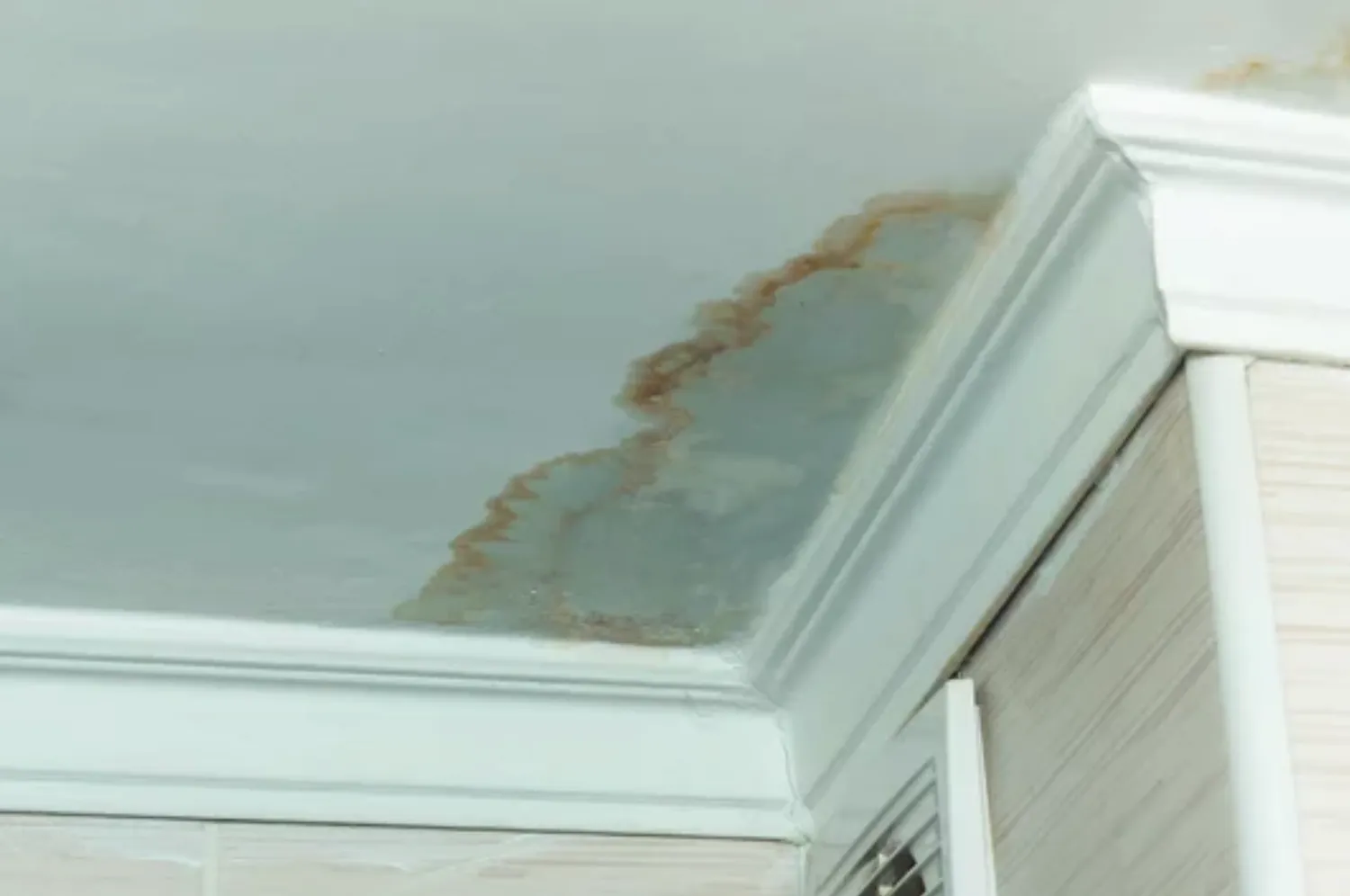
Signs you need this
- • A brown ring spreading across a ceiling after a Nor'easter, or a wall gone soft and bulging near grade after storm surge pushed water up against a coastal foundation
- • A first floor or basement wall in Shippan Point or The Cove that took on water during a storm tide and now smells musty within a day or two
- • A section of ceiling that's sagged so far it's sitting a few inches lower than it should, or has already partially let go
- • A Nor'easter or coastal storm event brings surge or wind-driven rain into a Sound-adjacent property, and the homeowner needs the damage documented and repaired for an insurance claim
- • A ceiling that was painted over after an old stain finally sags or collapses, or a new stain appears and the homeowner isn't willing to wait this time
Stamford Elite Drywall repairs drywall and ceilings damaged by flooding, storm surge, roof or plumbing leaks, and the mould risk that follows standing moisture. The process starts with a moisture meter, not a visual guess, to find exactly how far the water traveled through the assembly before any cutting begins. Compromised board and, where needed, wet insulation are removed, the framing is dried and verified below a safe moisture threshold, and new mould-resistant board goes up only once that’s confirmed. Where insurance is involved, damage is documented with photos and moisture readings that support a claim, not just a repair invoice.
What a Nor’easter actually does to a Shippan Point wall
Stamford’s Sound-facing neighborhoods, Shippan Point and The Cove especially, sit exposed to a category of damage most inland Stamford properties never see: storm surge and wind-driven rain pushed directly against foundations and lower walls during a Nor’easter. That’s a different failure mode than a slow plumbing leak. Surge water arrives fast, often gets into wall cavities at or near grade before anyone notices, and can recede within a day, leaving a wall that looks merely damp on the surface while the framing and insulation behind it are saturated. Stamford Elite Drywall doesn’t treat a dried-looking wall as a dry wall. Every water-damage assessment starts with a moisture meter run across the surrounding board and into the framing, because gypsum loses its structural bond to the paper facing well before it looks visibly ruined, and framing that reads above roughly 16 percent moisture is still an active mold risk even if the surface has stopped feeling wet to the touch.
That distinction matters most for insurance. A homeowner filing a storm-surge claim needs damage documented at the point it happened, not after a well-meaning but incomplete repair has already covered it up. Stamford Elite Drywall photographs and records moisture readings as part of the assessment, so the claim reflects the actual extent of what the water did, not just what’s visible after drywall goes back up. Skipping that documentation step, or rushing to close up a wall before an adjuster has seen it, is one of the more common ways homeowners end up underpaid on a legitimate claim.
The 48-hour mold clock, and why the fix has to outlast the paint
Mould doesn’t wait for a repair schedule. Once moisture sits in a wall or ceiling cavity, conditions for mould growth can develop within about 48 hours, which is why water damage sits in the emergency tier rather than something scheduled around convenience. That timeline shapes the whole repair sequence: the water source has to be confirmed stopped, whether that means storm surge has receded or a roofer or plumber has closed off an active leak, before any drywall work starts, because repairing over an ongoing source just delays the same damage. Compromised board and any wet insulation get cut out entirely rather than patched around, the framing gets dried and verified below a safe threshold, and only then does new board go up, mould-resistant board like USG Mold Tough or Gold Bond XP in areas that experienced moisture, standard board where the damage didn’t reach.
The part that’s easy to skip, and the part that determines whether a repair actually lasts, is that final verification before covering the framing back up. A wall that looks dry to the touch can still be well above a safe moisture threshold inside the stud bay, and closing it up at that point traps water behind a fresh coat of paint and new board, which is exactly how a repair becomes a callback for mold six months later. Stamford Elite Drywall treats that verification step as the one that can’t be shortcut, regardless of how much pressure there is to get a room back together quickly after a storm.
Materials & standards
Products & materials we use
- USG Mold Tough
- Gold Bond XP
- USG Sheetrock
- Joint compound
Standards & codes we work to
- IRC R302
- ICRA
- CT Home Improvement Contractor (HIC) registration
- EPA RRP Lead-Safe Certified Firm
What the terms mean
- Mold-resistant board
- Moisture meter
- Ceiling collapse
- Flood
- Leak
- Insurance documentation
Options & variants
| Option | When it applies | Cost |
|---|---|---|
| Localized cut-and-patch | Small leak caught early, limited to one area | Baseline |
| Wall or ceiling section replacement | Water traveled further than a patch can address | Moderate to higher |
| Full-room remediation | Storm surge or flooding affecting multiple walls and a ceiling | Higher, often insurance-adjuster coordinated |
| Ceiling collapse repair | Ceiling has already partially or fully let go | Higher, structural check included |
What affects cost
- • Extent of moisture travel through the assembly, confirmed by moisture meter rather than visible staining alone
- • Whether mould has developed in the cavity, which requires remediation before new board goes up
- • Whether the source is an ongoing leak that needs a plumber or roofer addressed first, or a one-time storm event
- • Insurance documentation requirements, which can add steps but shouldn't add unnecessary delay
- • Number of rooms and whether ceiling, wall, or both are affected
What to expect
- 1
Assess and confirm source stopped
Assess the damage and identify the water source, confirming it's stopped before repair begins.
- 2
Moisture-meter the assembly
Moisture-meter the surrounding board and framing to find the true extent of the damage.
- 3
Cut back and remove
Cut back to sound material and remove any wet insulation, containing dust and debris.
- 4
Dry and verify
Dry the framing and verify it's below a safe moisture threshold before covering it.
- 5
Rebuild and document
Hang mould-resistant board, tape and finish to match the surrounding wall or ceiling, and document for insurance if applicable.
When this isn’t the right call
- If the ceiling issue is age-related sag or fastener pops with no water source involved, ceiling installation and repair is the better fit.
- If the damage is a small cosmetic hole or crack unrelated to moisture, drywall repair and patching is the better fit.
Frequently asked questions
My ceiling has a water stain but it's dry now, do I still need repair? +
Yes, a painted-over water stain often looks solved but the gypsum behind it has usually lost its bond to the paper facing, and the framing may still test high on a moisture meter. Stamford Elite Drywall checks before assuming a dry-looking stain means the assembly is actually dry.
How fast does mould start after water damage? +
Mould can begin developing in a wall or ceiling cavity within about 48 hours of standing moisture, which is why water damage is treated as an emergency rather than something to schedule around.
Do you help document damage for an insurance claim? +
Yes, damage is documented with photos and moisture readings as part of the repair process, which supports a homeowner's claim rather than leaving them to document it themselves.
My basement took on water during a Nor'easter, is that covered by this service? +
Yes, coastal storm surge and wind-driven rain affecting Shippan Point, The Cove, and other Sound-adjacent properties is one of the more common triggers for this service in Stamford.
What happens if the water damage isn't from a storm but a slow, hidden leak? +
The approach is similar, moisture-metering the assembly to find the actual extent of travel, but the source needs to be identified and stopped first, sometimes requiring a plumber or roofer before drywall repair can begin.
Can you repair a ceiling that's already partially collapsed? +
Yes, though a ceiling collapse gets a structural check as part of the assessment to confirm what's safe to work under before repair begins.
What kind of board do you use for areas that had water damage? +
Mould-resistant board, such as USG Mold Tough or Gold Bond XP, is used once the framing is confirmed dry, rather than standard board that offers no resistance if moisture returns.