
Signs you need this
- • A hairline crack over a doorway or window header that keeps reopening after painting
- • Bulging or sagging plaster on a ceiling, sometimes with a hollow, drum-like sound when tapped
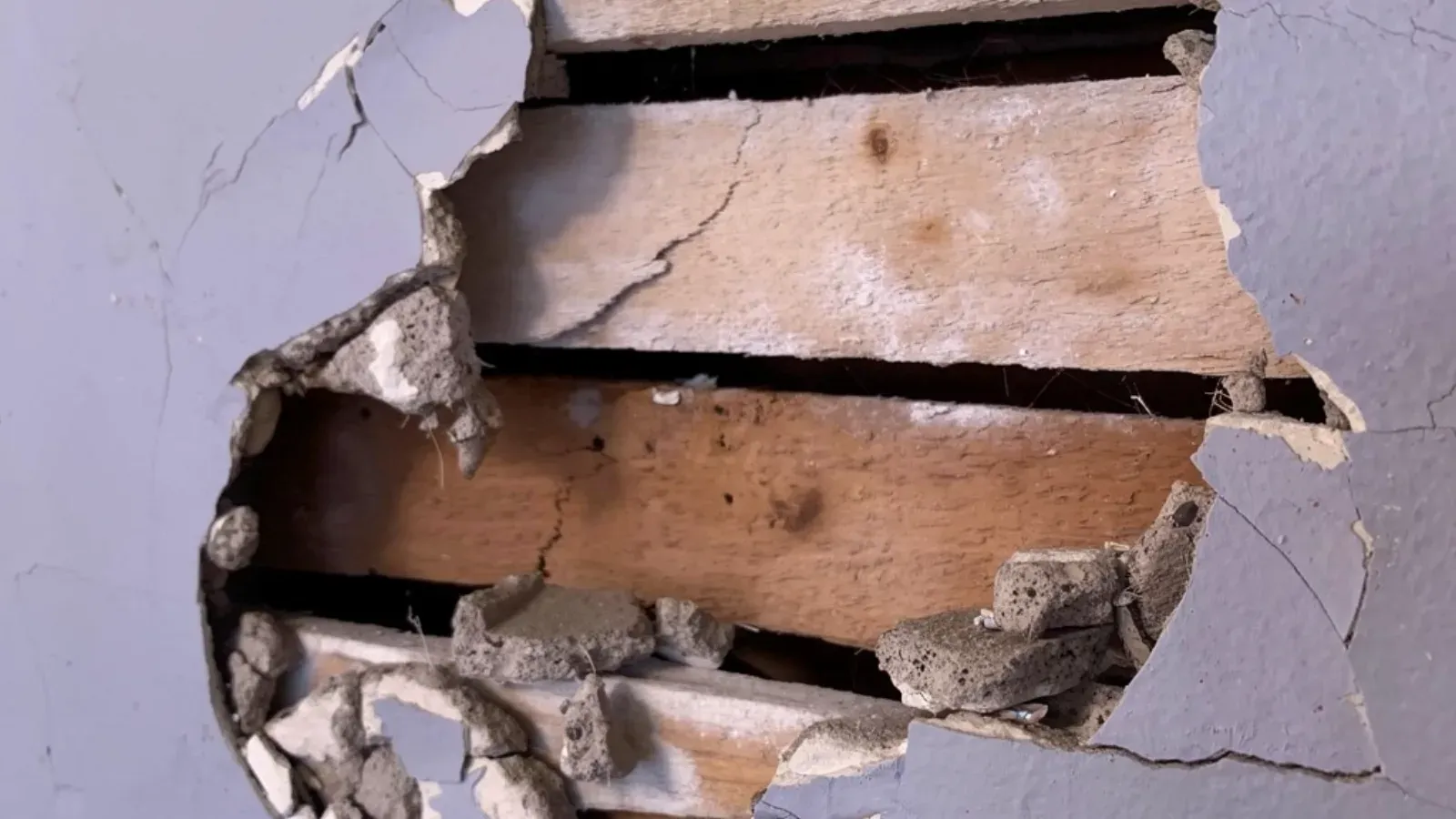
- • Chunks of plaster keyed into wood lath letting go and falling, especially in a stairwell or upstairs bedroom
- • Map-cracking or a spiderweb pattern across a ceiling in a pre-1940s Shippan Point or Westover colonial
Why Stamford’s oldest neighborhoods still live with plaster, not drywall
Shippan Point, Belltown, Westover, and the older blocks of Springdale and Glenbrook were largely built out before drywall became the standard wall system after World War II. Those homes were framed with wood lath, thin strips nailed horizontally across the studs, then coated in three passes of lime-and-sand or gypsum plaster that squeezed through the gaps between the laths and curled over into a mechanical key. That key is what holds the whole wall up, and it’s also what fails first. Decades of house settling, seasonal humidity swings off Long Island Sound, and old nail corrosion all work on those keys until they snap, and a section of ceiling that looked fine yesterday is on the floor today. North Stamford and mid-country estate colonials, generally larger and built with more structural mass, show the same failure mode on longer timelines but the same underlying mechanism: lath keys age, and once enough of them go, the plaster loses its grip regardless of how solid the wall looks from the front.
Stamford Elite Drywall treats a plaster crack as a system question, not just a cosmetic one. Tapping the surface and reading how it sounds, hollow versus solid, tells more about the lath underneath than the crack itself does. A hairline crack over a sound key can be stitched and skimmed in an afternoon. The same crack over failed keys will reopen within a season no matter how well it’s patched, because the substrate underneath is still moving. That distinction is why an honest assessment starts with the lath, not the visible damage.
Skim coating over lath versus a full conversion
When the lath is structurally sound but the finish coat has crazed, yellowed, or delaminated, skim coating over the existing plaster is usually the right call. A thin coat of joint compound or veneer plaster applied in one or two passes, feathered out and sanded to match the surrounding wall, restores a smooth surface without touching the structural layer underneath. This is common in Westover and Shippan Point homes where the original finish coat has simply aged out after seventy or more years, but the bones of the wall are fine.
Plaster-to-drywall conversion is the right call when water damage, a failed lath system, or a prior bad repair has compromised enough of the wall that patching would be chasing new cracks every year. Removing the plaster and lath down to the studs and hanging new gypsum board lets Stamford Elite Drywall correct framing issues that were hidden behind the old system, run a proper vapor strategy, and finish to a Level 5 smooth surface that modern paint sheens require. The trade-off is scope: a conversion touches trim, door casings, and often flooring transitions that a skim repair never does, since original plaster walls tend to run thicker than a drywall assembly. On homes in the Gold Coast ring where a buyer specifically wants the room to still read as original plaster, historic-sensitive skim repair keeps the wall thickness and hand-finished character intact instead of defaulting to a full tear-out.
Materials & standards
Products & materials we use
- USG Sheetrock
- National Gypsum Gold Bond
- CertainTeed
- Georgia-Pacific ToughRock
Standards & codes we work to
- 2022 Connecticut State Building Code (2021 IBC/IRC)
- ASTM C1396/C840
- GA-214 finish levels
- EPA RRP
What the terms mean
- lath and plaster
- skim coat
- Level 5 finish
- crack stitching
- keying
- joint compound
- historic-sensitive skim over lath
Options & variants
| Option | When it applies | Cost |
|---|---|---|
| Crack stitching and skim repair | Hairline to moderate cracking with sound lath underneath | Lower cost, faster turnaround |
| Skim coat over lath | Finish coat has failed but wood lath and keys are structurally sound | Moderate cost, full-wall or full-ceiling scope |
| Plaster-to-drywall conversion | Lath has failed structurally or water damage has compromised large sections | Higher cost, most durable long-term outcome |
| Historic-sensitive match repair | Ornamental cornice, curved wall, or a finish the homeowner wants preserved as original | Higher cost, hand-finishing time |
What affects cost
- • How much of the original wood lath is still structurally sound versus needing full removal
- • Whether the repair needs to match an existing textured or hand-troweled finish versus a smooth modern finish
- • Ceiling work costs more than wall work due to overhead application and containment
- • Access, including whether furniture, built-ins, or plaster crown molding need protection or removal first
- • Whether asbestos-age skim coat or older paint layers need testing before disturbance
What to expect
- 1
On-site assessment
We tap the plaster and lath system for hollow spots, check key condition, and identify water staining or structural movement behind the crack.
- 2
Repair vs. conversion discussion
You see exactly which sections are salvageable before we settle on a skim repair or a full plaster-to-drywall conversion.
- 3
Containment
Plaster removal and skim coating both generate dust, so the work area is contained to keep it off floors and furniture.
- 4
Keying, patching, or skim-coating
The affected area is keyed, patched, or skim-coated, then built up in coats to match the surrounding wall or ceiling profile.
- 5
Texture and sheen match
Once the finish coat cures, texture and sheen are matched, followed by a walkthrough before paint.
When this isn’t the right call
- If the plaster damage covers most of a room or the lath has failed across large sections, a full plaster-to-drywall conversion is usually the better fit, which is covered as a variant of this service.
- If the cracking is limited to a finished basement with drywall, not original plaster, a basement drywall finishing project is the better fit.
- If the concern is mold or moisture staining behind the plaster rather than structural cracking, a moisture-resistant drywall upgrade is the better fit.
Frequently asked questions
Can you match the texture of my original plaster so the repair doesn't show? +
Yes. Stamford Elite Drywall hand-finishes repairs to match the surrounding wall, whether that's a smooth troweled finish common in Shippan Point colonials or a coarser texture found in North Stamford estate homes. A test patch in an inconspicuous area confirms the match before the full repair is finished.
Is it cheaper to just drywall over the plaster instead of repairing it? +
Covering plaster with drywall changes wall thickness at openings and can trap moisture behind an already-compromised surface. For most Stamford homes, repairing or skim-coating the existing plaster keeps trim and door reveals correct and avoids that risk.
How do I know if my crack is cosmetic or a sign of bigger problems? +
A straight, stable hairline crack that doesn't reopen after a season is usually cosmetic settling. A crack that's widening, running diagonally from a corner, or paired with a sagging ceiling section points to a lath or structural issue worth an in-person assessment.
Will this disturb old paint that might contain lead? +
On any pre-1978 Stamford home, disturbing old plaster and paint falls under EPA RRP rules. Stamford Elite Drywall follows lead-safe work practices on eligible homes as part of the job, not as an add-on.
How long does a typical plaster repair take? +
A single-room crack and skim repair often finishes in a day or two once containment is set up; a full skim coat over a ceiling or a plaster-to-drywall conversion in a larger room takes longer to allow proper drying between coats.