
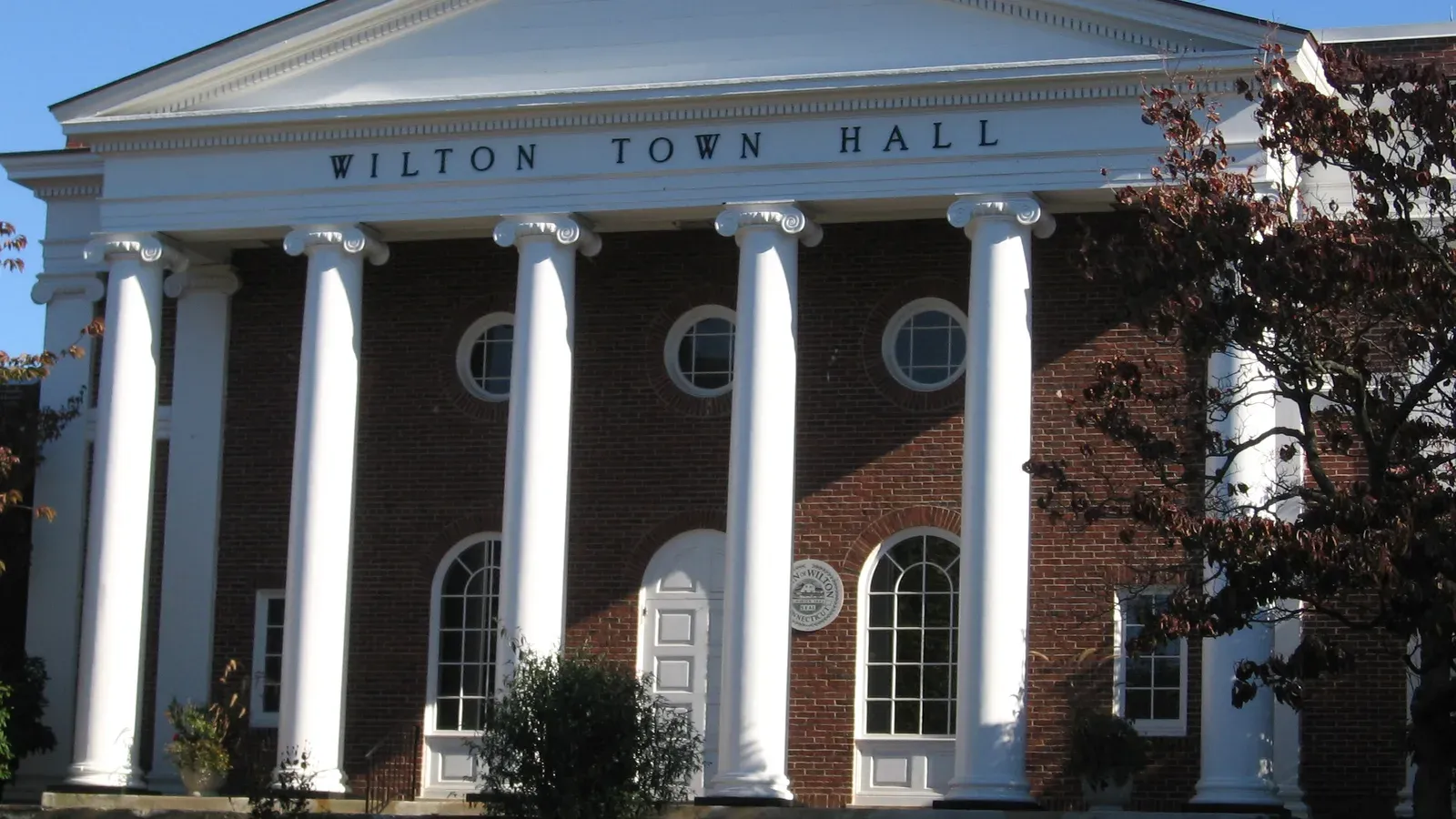
About 13 mi / 22 min from Stamford. Same-week scheduling for Wilton, covering both the Route 7 corridor and the outlying wooded neighborhoods.
Wilton’s housing stock spans three centuries on the same street
Drive Route 7 through Wilton Center or wind through the wooded lots off the Norwalk River Valley roads, and the age range of the housing stock is wider than in most Fairfield County towns. Antique and reproduction colonials, many original to the 1700s and 1800s, sit on large lots near Wilton Center and the historic Georgetown mill village. A short distance away, newer estate-scale homes built over the past two or three decades fill in along the Route 33 and Route 7 corridors. That range matters for drywall work because the two building types fail differently and need different instincts. The antique colonials carry original lath and plaster, and that plaster cracks along the wood lath strips as the house settles, in long hairline lines rather than the cleaner corner cracks of a newer home. Stamford Elite Drywall repairs these in kind, matching the existing wall’s texture and hardness so the patch doesn’t stand out against decades-old plaster, and following EPA RRP lead-safe practices on any home old enough to carry pre-1978 paint.
Georgetown’s mill-village character adds its own wrinkle
The Georgetown section, straddling the Wilton, Redding, and Ridgefield line along the Norwalk River, holds older worker housing and cottages built around the historic mill that gave the village its name. These homes tend to be smaller and older than the estate-scale construction elsewhere in Wilton, with plaster walls that have often absorbed decades of settling near the river valley’s damp lowlands. A repair here calls for the same plaster-matching sensitivity as the colonials near Wilton Center, but with an eye toward the additional movement a river-valley foundation can see over time.
What the newer estate homes need instead
On the other end of Wilton’s housing spectrum, the estate-scale homes built along Route 33 and Route 7 over the past few decades are standard drywall construction, but they’re built with the open floor plans and large window walls typical of higher-end suburban design. That layout leaves long, unbroken ceiling and wall planes with nowhere for an uneven finish to hide. Stamford Elite Drywall finishes additions and full remodels on these homes to Level 5, skim coating the full surface so a new addition’s seam into the existing structure disappears under the kind of natural light these open plans are built around. And across both ends of Wilton’s housing range, the everyday drywall repair and patching work, nail pops, door-swing dings, a wall opened for a plumbing fix, still needs texture-matched patching whether the house is a 1780s colonial or a 2010 build, which is where most of Wilton’s routine call volume actually comes from.
Neighborhoods we work in
- Wilton Center — Town center along Route 7, older commercial buildings and adjacent colonial-era residential streets.
- Georgetown — Historic mill village straddling the Wilton/Redding/Ridgefield line, older worker housing and cottages along the Norwalk River.
- Cannondale — Small village area with its own Metro-North Danbury branch station, older homes near the tracks.
- Norwalk River Valley — Wooded corridor running through town, defining much of Wilton's large-lot residential character.
Why Wilton homes need what they need
Wilton's antique colonials, especially around Wilton Center and Georgetown, were built on original lath and plaster.
These walls crack along the lath pattern and need a matched skim coat instead of a generic drywall-style patch.
Newer estate construction along the Route 33/7 corridor sits alongside the older colonial stock.
Additions and full remodels on these larger homes need a Level 5 finish that holds up under the open floor plans typical of newer Wilton builds.
Wilton's mix of old and new homes means everyday drywall damage, nail pops, and small dings still turn up across the town's suburban housing stock.
Homeowners need reliable patching that matches existing texture whether the house is a 1780s colonial or a 2005 build.
What we’re called for most in Wilton
Local resources for Wilton homeowners
- Town of Wilton Building Department — Cosmetic interior patching is generally exempt, but plaster-to-drywall conversion and larger renovation work typically require a permit. (Cloudflare-challenge to curl, browser-valid)
- Wilton Assessor's Office — Confirm your home's age and assessment record. (Cloudflare-challenge to curl, browser-valid)
Frequently asked questions
How do I know if my Wilton Center home has plaster or drywall walls? +
Age is the best clue. Homes built before the mid-20th century in and around Wilton Center are usually original lath and plaster, which Stamford Elite Drywall can confirm on-site and repair in kind rather than defaulting to a drywall patch.
We're adding a room onto our Route 7 corridor house. Will the new drywall match our existing walls? +
Yes. Stamford Elite Drywall matches texture and finish level at the seam between existing walls and new construction, whether the existing wall is original plaster or standard drywall, so the addition reads as part of the house rather than an obvious add-on.