
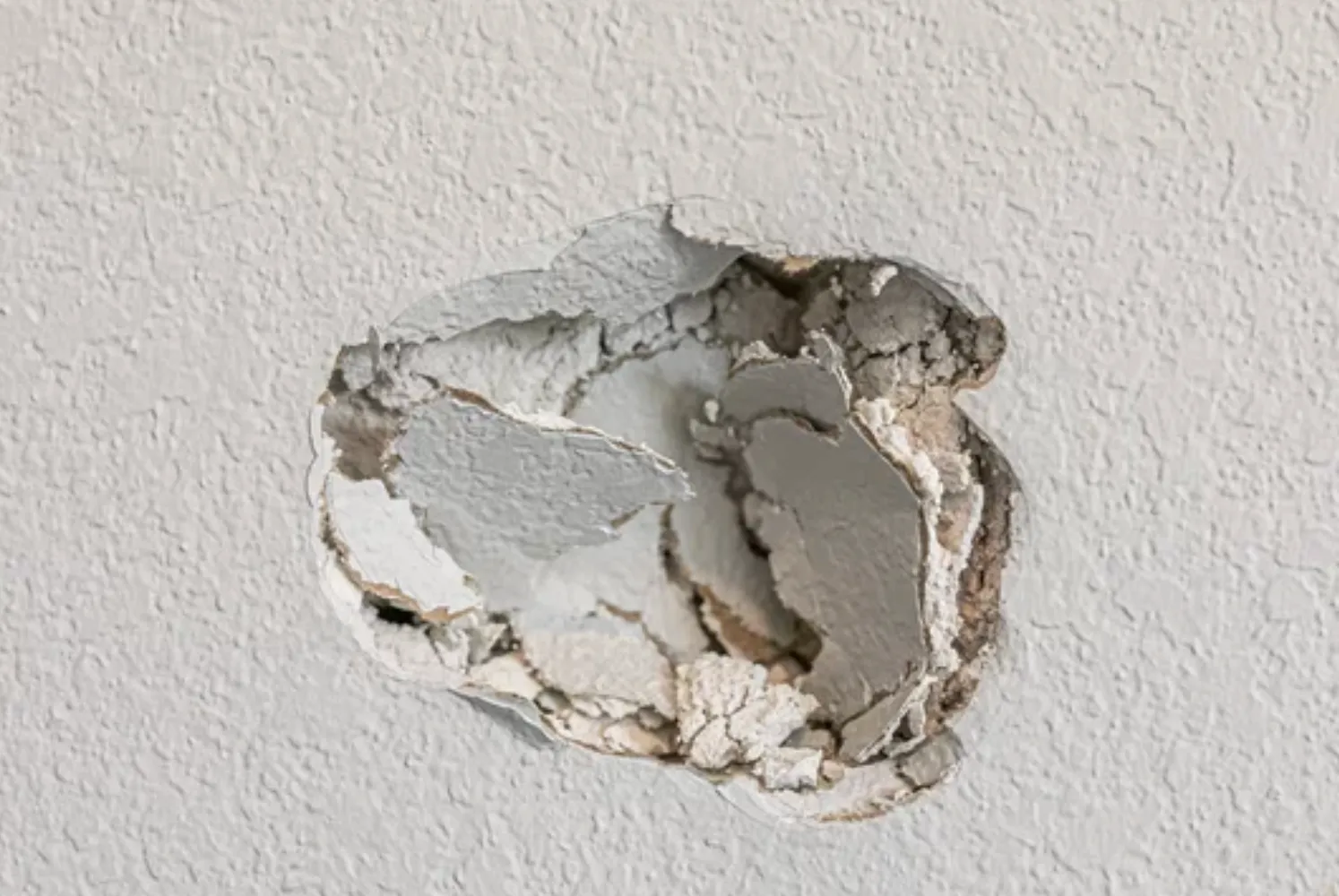
Signs you need this
- • A doorknob hole in a hallway wall, a fist-sized dent from moving furniture, or a picture-hanging gouge that's grown into an eyesore
- • A hairline crack running from a doorframe corner or along a ceiling seam that reappears every year or two no matter how many times it's painted over
- • A patch from a previous handyman job that reads as a slightly different texture or a faint square outline under certain light
- • Selling or listing the house and needing walls that show clean in photos and to a buyer's inspector
- • A recurring crack finally gets wide enough, or reappears often enough, that painting over it again stops feeling like a fix
Stamford Elite Drywall repairs holes, dents, cracks, and failed patches in existing walls and ceilings, matching the surrounding texture and finish so the repair disappears rather than announcing itself. Small holes get a mesh or California patch and two to three coats of compound; larger holes get a cut-in piece of matching board screwed to backing. On homes with original lath-and-plaster walls, the approach shifts to a plaster-compatible patch or a skim-over technique so the new material bonds correctly to a substrate that behaves differently than drywall.
The patch that disappears versus the patch you can still see
There’s a real difference between a repair that stops the hole from being a hole and a repair that vanishes into the wall, and most of that difference comes down to two things: backing and texture. A doorknob hole or a dent from a moving day mishap is straightforward, cut back to clean edges, add backing if the hole is bigger than a standard patch can bridge unsupported, set the patch, and coat it in progressively wider layers of joint compound so there’s no ridge to catch light. Where DIY patch kits fall short is exactly there: a patch that’s flush to the touch but proud or recessed by even a sixteenth of an inch will show under a hallway light at the wrong angle, and a patch on a textured wall that gets painted smooth stands out immediately. Stamford Elite Drywall matches the surrounding texture, knockdown, orange peel, or a smooth Level 4 finish, before calling a repair finished, because the goal isn’t a patch that’s technically solid, it’s a wall where nobody can find where the damage was.
Cracks are a different problem entirely, and the mistake most homeowners make is treating a crack like a cosmetic issue instead of a symptom. A hairline crack at a door or window corner that comes back every year or two after repainting is usually stress concentrating at that corner as the house moves seasonally, common in Stamford’s older two-family stock where framing has settled over a century. Taping over it with standard joint compound without mesh tape underneath just gives the crack a fresh, thinner place to reopen. A ceiling seam crack, meanwhile, can be ordinary drywall seam movement or an early sign of a roof or plumbing leak overhead, and those look nearly identical until someone actually inspects the area.
Why plaster walls need a different repair, not a bigger drywall patch
Shippan Point, Glenbrook, and West Side are full of early-1900s single- and two-family homes built with lath-and-plaster walls, three coats of plaster over wood lath strips, not the single sheet of gypsum board used in newer construction. Patching a plaster wall with a standard drywall patch technique usually fails within a year: the two materials have different densities and expand and contract differently, so a drywall patch set into a plaster wall telegraphs as a slightly different texture or a faint outline even after painting, and it can crack loose from the surrounding plaster as the house moves through a heating season. Stamford Elite Drywall approaches these walls with a plaster-compatible patch, matching the buildup with a setting-type compound that bonds and behaves closer to the original material, or skims over a larger repaired section so the transition disappears into the surrounding wall rather than sitting as a visible island. Getting this distinction right the first time is usually cheaper than a drywall-style patch that has to be redone once it starts showing through the paint.
Materials & standards
Products & materials we use
- USG Sheetrock
- Joint compound (setting and pre-mixed)
- FibaTape
Standards & codes we work to
- ASTM C840
- CT Home Improvement Contractor (HIC) registration
What the terms mean
- Hole repair
- Patching
- Crack repair
- Ceiling patch
- Lath and plaster
- Mud and tape
- Corner bead
Options & variants
| Option | When it applies | Cost |
|---|---|---|
| Small hole/dent patch | Doorknob holes, screw holes, minor dents under a few inches | Baseline, often same-visit |
| Cut-in board patch | Holes larger than a standard patch kit can bridge | Moderate, requires backing |
| Crack repair with mesh tape | Corner cracks, ceiling seam cracks, recurring hairline cracks | Moderate, diagnosis-dependent |
| Plaster-compatible patch | Original lath-and-plaster walls in pre-1940s housing | Higher, specialized technique |
What affects cost
- • Size and depth of the damage, and whether backing needs to be added behind the hole
- • Whether the wall is drywall or original lath-and-plaster
- • Number of separate repair spots in one visit versus one larger area
- • Texture matching required to blend the patch into an existing knockdown, orange peel, or smooth wall
- • Whether the crack is cosmetic or points to a structural or moisture cause that needs investigating first
What to expect
- 1
Inspect
Check the damage and, for cracks, whether it's cosmetic or tied to a moisture or settling cause.
- 2
Cut back and back
Cut back to sound material and add backing if the hole is larger than a patch can bridge.
- 3
Set and coat
Set the patch and apply joint compound in coats, sanding between each.
- 4
Texture match
Match the surrounding texture — knockdown, orange peel, or smooth.
- 5
Final check
Check under raking light before the visit is called complete.
When this isn’t the right call
- If the wall or ceiling shows a stain, sagging, or bulging from a leak, water damage drywall repair is the better fit.
- If the repaired area's texture needs to match a large surrounding field rather than a small local patch, drywall texture matching is the better fit.
Frequently asked questions
Can you match the texture on my walls so the patch doesn't show? +
Yes, Stamford Elite Drywall matches knockdown, orange peel, or smooth finishes so the repaired area blends into the surrounding wall rather than reading as a visible patch.
My house has plaster walls, not drywall, can you still patch it? +
Yes, many homes in Shippan Point, Glenbrook, and West Side have original lath-and-plaster walls, and Stamford Elite Drywall uses a plaster-compatible patch or skim-over approach rather than treating it like standard drywall.
Why does the same crack keep coming back after I paint over it? +
A crack that keeps reopening usually means the underlying movement, framing settling, a seasonal expansion joint, or moisture, hasn't been addressed, only painted over. Stamford Elite Drywall diagnoses the cause before patching so the fix holds.
Do you patch small holes from moving or hanging pictures? +
Yes, small holes and dents are one of the most common calls, and most are patched and finished in a single visit.
How do you make sure a patch is invisible after painting? +
The compound is feathered wide enough that there's no visible ridge, and the surrounding texture is matched before the area is primed, so the patch reads as part of the original wall once painted.
Do you handle multiple small repairs in one visit, like before a home sale? +
Yes, this is a common request from sellers prepping a house for listing photos, and multiple spots are typically handled in one visit.