
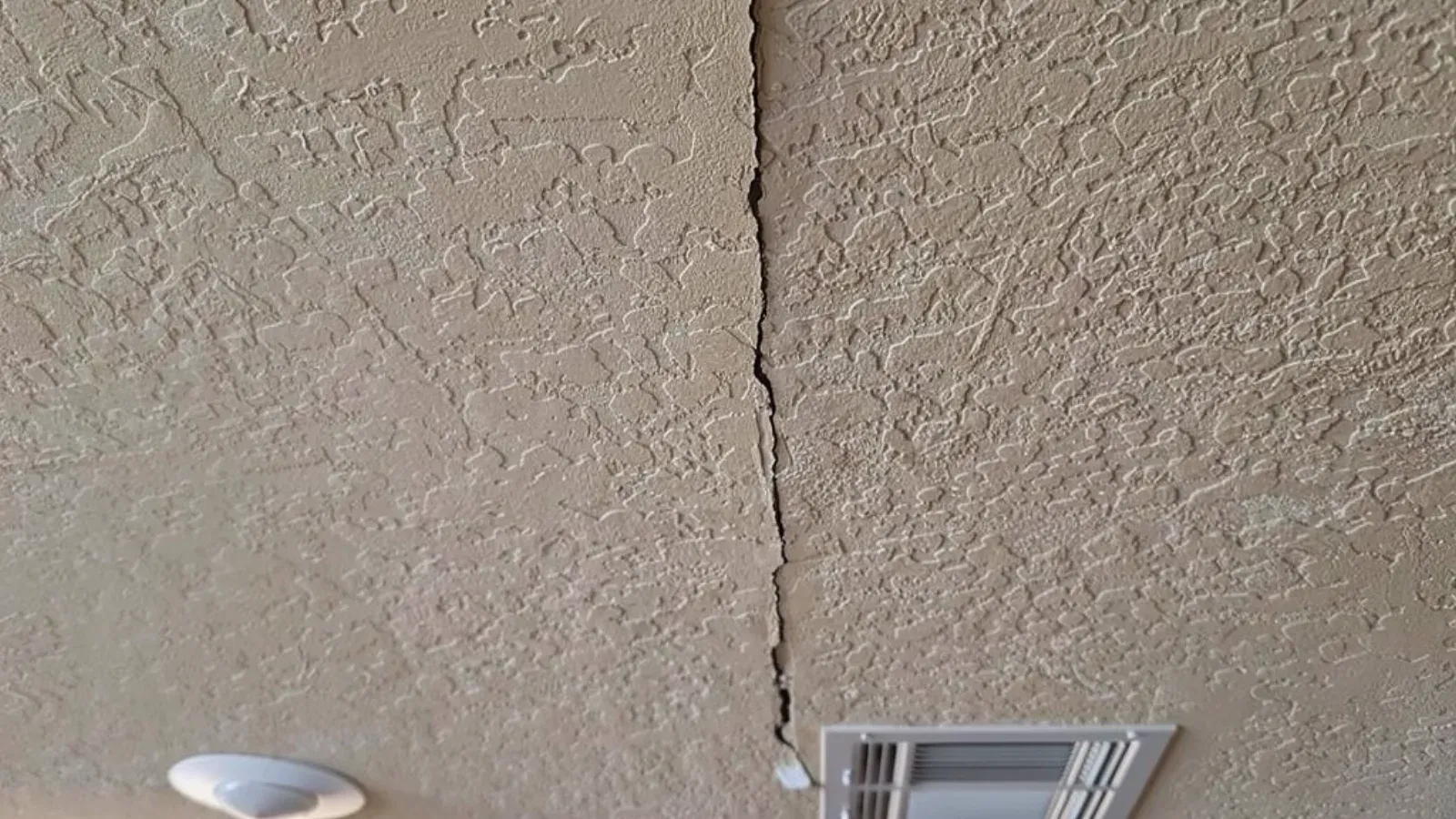
Signs you need this
- • A ceiling with a slight belly or sag between joists, most noticeable when standing under it and looking across the surface at an angle
- • Nail or screw pops appearing as small dimples or rings across an older ceiling, sometimes in a row that follows the joist line
- • A ceiling in an upstairs bedroom or attic-adjacent room that feels different in winter, cold to the touch, occasionally damp near the eaves
- • The sag becomes visible enough to worry about rather than just cosmetic, or a homeowner notices it worsening over a season
- • A home inspection ahead of a sale flags ceiling movement or fastener pops as something to address
Stamford Elite Drywall repairs and replaces ceilings that are sagging, cracking, or showing widespread fastener pops, distinct from a single water-damage incident. This covers re-securing board to joists where fasteners have backed out or the original adhesive bond has failed, replacing sections where the board itself has lost structural integrity, and addressing attic-side condensation that’s affected a ceiling from above without a discrete leak event. Where a full section needs to come down, new board is hung, taped to match the room’s existing finish level, and blended so the repaired section isn’t visually distinct from the rest of the ceiling.
Reading a ceiling that’s sagging without an obvious cause
Not every ceiling problem in Stamford starts with a burst pipe or a storm. A lot of the calls Stamford Elite Drywall gets are quieter than that: a slight belly across a bedroom ceiling that’s been there for a while and slowly getting more noticeable, or a scatter of small dimples following the joist lines where fasteners have started to back out. In mid-country and North Stamford colonials built decades ago, this is often straightforward material fatigue, the original screws or nails securing board to joists loosen slightly as framing dries and shrinks over years of heating seasons, and the board sags almost imperceptibly until the angle of a lamp or a low winter sun makes it obvious. That’s a different repair than a water event: there’s no cutting back to dry framing, no moisture testing, just re-securing the board properly and skim coating over the old fastener pattern so the ceiling reads flat again.
The less obvious cause is what’s happening above the ceiling, not at it. A room directly under an attic space or a roofline can develop sag or soft spots from condensation forming on the attic side of the ceiling assembly during cold months, moisture that never shows up as a dripping leak indoors but slowly affects the board from behind. This is common enough in older Stamford housing with less-than-ideal attic ventilation that it’s worth checking as part of any ceiling inspection, not just assuming a sagging ceiling always means a plumbing problem overhead. Diagnosing this correctly matters because re-fastening and refinishing a ceiling without addressing the ventilation issue causing the condensation just buys a homeowner a few more years before the same sag comes back.
Matching a repaired section into the ceiling around it
Once the cause is identified and dealt with, whether that’s re-securing existing board or replacing a section that’s too far gone, the harder part of the job is often invisible in the estimate: making the repair disappear into the ceiling around it. A ceiling that’s been painted for years has a finish level and often a subtle texture that a fresh patch won’t automatically match. Taping and finishing the repaired section to the same level as the surrounding ceiling, then blending texture if the room has any, is what separates a repair a homeowner forgets about within a week from one they notice every time they look up. This matters more on ceilings than walls, since ceiling light, whether from a window, a fixture, or daylight through a skylight, tends to rake across the surface at a low angle and expose any mismatch in flatness or texture immediately. Stamford Elite Drywall treats the finish match as part of the repair itself, not a separate afterthought once the structural fix is done.
Materials & standards
Products & materials we use
- USG Sheetrock
- National Gypsum Gold Bond
- Joint compound (setting and pre-mixed)
Standards & codes we work to
- ASTM C840
- GA-214 finish levels (0-5)
- CT Home Improvement Contractor (HIC) registration
What the terms mean
- Sagging ceiling
- Ceiling replacement
- Fastener pops
- Suspended-ceiling grid
- Corner bead
- Joint compound
Options & variants
| Option | When it applies | Cost |
|---|---|---|
| Re-fasten and skim | Fastener pops or minor sag, board still structurally sound | Baseline |
| Section replacement | Localized sag or damage too extensive to re-secure | Moderate |
| Full ceiling replacement | Widespread age-related failure across the room | Higher |
| Suspended-grid ceiling replacement | Basement or converted space with an aging drop ceiling | Moderate, grid and tile dependent |
What affects cost
- • Extent of the sag or damage — a few fastener pops versus a full-section replacement
- • Ceiling height and room size, which affect scaffolding or lift needs
- • Whether the cause is isolated to the board or involves attic-side moisture that needs its own fix first
- • Finish level match required to blend a repaired section into the rest of the ceiling
- • Whether a suspended grid system is being replaced along with the ceiling material
What to expect
- 1
Inspect
Inspect the ceiling and, where relevant, the attic space above it to identify the cause of sag or fastener failure.
- 2
Determine scope
Determine whether re-fastening and a local skim is sufficient or a section needs replacement.
- 3
Re-secure or replace
Re-secure or remove and replace the affected board.
- 4
Finish and match
Tape, finish, and texture-match the repaired area into the surrounding ceiling.
- 5
Final check
Check under raking light and, where attic moisture was a factor, confirm ventilation is addressed.
When this isn’t the right call
- If the ceiling shows an active stain, bulging, or recent water intrusion from a leak or storm event, water damage drywall repair is the better fit.
- If the ceiling is structurally fine and the issue is a dated popcorn or acoustic texture, popcorn ceiling removal is the better fit.
Frequently asked questions
Why is my ceiling sagging even though there's no visible leak? +
Sag without an active leak is often age-related, fasteners that have backed out of the joists over time, or the original adhesive bond between board and framing failing. It can also point to attic-side condensation affecting the board from above without a discrete leak event, which is worth checking during the inspection.
What causes nail or screw pops on an older ceiling? +
Fasteners can back out slightly as framing dries and shrinks over years, or as the house settles seasonally. It's common in older ceiling assemblies and is addressed by re-securing the board and skim coating over the affected spots.
Do I need a full ceiling replacement or can it be patched? +
It depends on how extensive the sag or fastener failure is. Localized issues are often re-fastened and skim coated; widespread age-related failure across a room usually calls for section or full replacement.
Can winter condensation from the attic really affect my ceiling? +
Yes, in colder months, moisture can build up on the attic side of a ceiling assembly without ever showing as a visible leak indoors, and over time that can soften board or contribute to sag. It's worth checking attic ventilation alongside the ceiling repair itself.
Will a repaired section of ceiling match the rest of the room? +
Yes, the repaired area is taped, finished, and texture-matched to the existing ceiling's finish level so it doesn't read as a visibly different patch once painted.
Do you replace old suspended or drop ceilings too? +
Yes, aging suspended-ceiling grid systems in basements or converted spaces are replaced as part of this service, whether the goal is a like-for-like grid or converting to a standard drywall ceiling.