
Signs you need this
- • A room or full floor that needs to be gutted before a renovation can start, whether it's original plaster, old drywall, or a failed prior finish
- • A popcorn ceiling in an older Stamford home that needs to come down before repainting or updating a room
- • Water-damaged or mold-affected walls that need to be fully removed rather than patched
- • A condo or apartment unit-turnover at Harbor Point or downtown needing interior walls stripped back before a new layout goes in
Why tear-out in a Stamford home starts with the building’s age, not a sledgehammer
Every drywall or plaster removal project in Stamford starts with the same question: when was this house built. That single fact determines whether removal can begin immediately or whether testing needs to happen first. Homes built before 1978 fall under EPA RRP rules once paint or older finish materials are going to be disturbed, and popcorn ceilings from that era occasionally contain materials that require specific handling once tested. Stamford’s older neighborhoods, Shippan Point, Belltown, Westover, and pockets of Springdale and Glenbrook, are dense with exactly this housing stock, so age-appropriate testing isn’t a rare add-on here, it’s a routine first step Stamford Elite Drywall builds into the schedule rather than treating as an afterthought that delays the job once it’s already started.
Once testing clears the way, or on newer construction where it isn’t required, the actual removal work varies more than people expect. Standard drywall comes down relatively cleanly, with predictable debris volume and straightforward disposal. Original lath and plaster, still present throughout Stamford’s early-1900s single- and two-family homes, is a heavier, dustier, and slower removal, and it frequently exposes framing conditions, old electrical knob-and-tube remnants, insulation choices from a prior era, or moisture damage that wasn’t visible from the finished side of the wall. That’s not a setback so much as useful information: a homeowner planning a renovation is better served learning about a framing issue when the walls are already open than discovering it mid-installation of new board.
Containment and disposal are what separate a clean tear-out from a mess
The demolition phase generates more dust and debris than almost any other part of a drywall project, and how that’s managed determines whether the rest of the house stays livable during a renovation or turns into a health and cleanup problem. Sealed containment barriers at doorways, careful debris bagging rather than open piles, and a controlled removal sequence keep dust from migrating into HVAC returns and adjacent rooms, which matters even more in an occupied home than in a full gut where the whole space is already off-limits.
Condo and apartment unit-turnovers at Harbor Point and other Stamford multi-family buildings add a layer most single-family tear-outs don’t have to consider: shared hallways, elevators, and ventilation systems that other residents use every day. Removal work in that setting has to respect building access windows and disposal logistics that a standalone house doesn’t require. Whether the job is a single bathroom in a Springdale ranch or a full unit gut at Harbor Point, the same principle holds: the tear-out is the foundation every later trade builds on, and a sloppy demolition phase creates problems, hidden debris in a wall cavity, dust contaminating new insulation, uneven substrate for new board, that show up as complaints weeks after the framing crew has already moved on.
Materials & standards
Standards & codes we work to
- EPA RRP
- 2022 Connecticut State Building Code (2021 IBC/IRC)
What the terms mean
- tear-out
- gut renovation
- popcorn ceiling
- asbestos-age testing
- debris haul
- containment
- lath and plaster
Options & variants
| Option | When it applies | Cost |
|---|---|---|
| Single-room tear-out | One room being renovated, walls and/or ceiling | Lower cost |
| Popcorn ceiling removal with testing | Pre-1978 home with a textured ceiling finish | Moderate cost, includes testing step |
| Full gut renovation prep | Multiple rooms or a full floor being stripped to studs | Higher cost, more debris volume |
| Condo unit-turnover demolition | Interior walls removed for a Harbor Point or downtown unit renovation | Moderate cost, coordinated with building access rules |
What affects cost
- • Whether age-appropriate testing is required before removal can begin, and the results of that testing
- • Square footage and whether the scope is walls only, ceiling only, or both
- • Debris volume and haul-away logistics, including building access constraints for a condo or apartment unit
- • Whether the material being removed is standard drywall, original lath and plaster, or a mixed prior renovation
What to expect
- 1
Walkthrough
We scope the removal and identify the home's age and construction type.
- 2
Testing
Where warranted by the home's age, testing happens and results are discussed before any disturbance of the material.
- 3
Containment
Containment is set up to keep dust and debris out of the rest of the home or building.
- 4
Removal
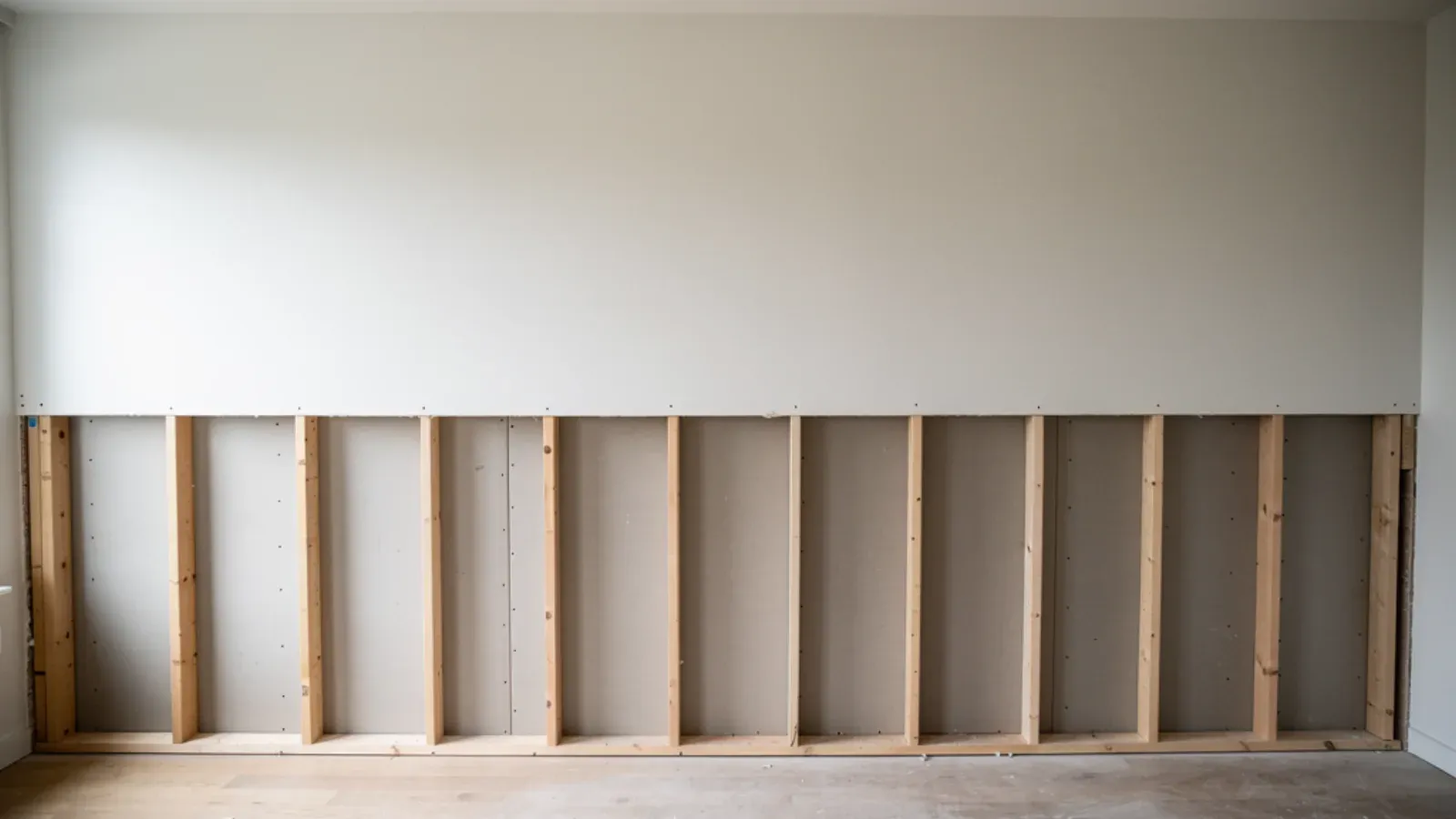
Drywall, plaster, or ceiling finish comes out down to studs, joists, or lath as the project requires.
- 5
Debris haul and clean sweep
Debris is bagged, hauled away, and the space gets a final clean sweep, ready for the next trade or the framing and finishing phase.
When this isn’t the right call
- If the project is a targeted repair of a small section, not a full tear-out, plaster repair and restoration is the better fit for plaster, or a standard patch for drywall.
- If the wall being removed needs to be replaced specifically with a fire-rated or acoustic assembly, that scope should be coordinated with fire-rated drywall assembly or soundproofing drywall so the removal and new build are planned together.
- If the concern is mold remediation beyond the drywall itself, involving HVAC or structural elements, a specialized remediation contractor may be needed beyond a drywall removal scope.
Frequently asked questions
Do I need testing before removing my popcorn ceiling? +
If the home was built before 1978, yes, age-appropriate testing is standard practice before disturbing the textured finish, since older ceiling treatments in that era sometimes contain materials that require specific handling. Stamford Elite Drywall builds this step into the process rather than skipping it.
How do you keep dust from spreading through the rest of my house during a tear-out? +
Containment barriers, sealed doorways, and controlled debris handling keep the demolition zone isolated from the rest of the home. This matters more in an occupied house or a condo unit where other residents share hallways and ventilation.
Can you remove drywall in a condo without disturbing the building's shared systems? +
Yes, condo and apartment unit-turnovers are handled with attention to what's shared structure versus what's within the unit, and coordinated with building access and disposal rules where applicable.
What happens to the debris after removal? +
Material is bagged or bundled on-site and hauled away for proper disposal, keeping the property clear of debris piles during the project rather than leaving cleanup for the end.
Is removing old plaster different from removing drywall? +
Yes, lath and plaster is heavier, dustier, and generally slower to remove than drywall, and it often reveals framing conditions that weren't visible before, which sometimes shifts the scope of the renovation once the walls are opened up.