Signs you need this
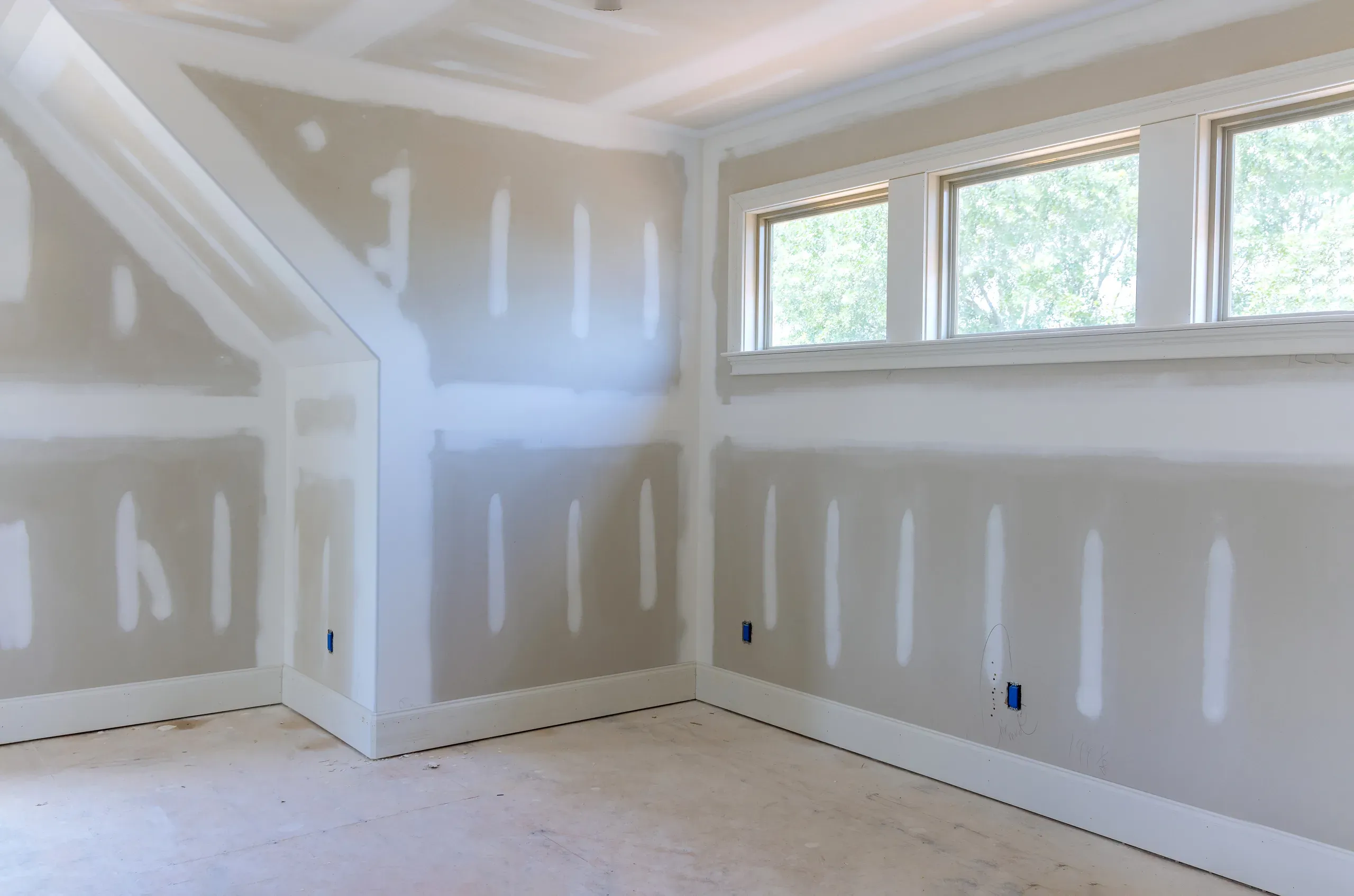
- • Freshly hung board with visible screws and butt joints, waiting for someone to make it look like a finished wall
- • A property manager turning over a downtown high-rise unit between tenants on a tight vacancy window
- • Seams that were taped by a framing crew rather than a dedicated finisher, now showing ridges or cracking under paint
- • The hanging crew has finished and the GC's schedule needs a finisher lined up before paint
- • A leasing office needs a turned unit ready to show within days, not weeks
Stamford Elite Drywall tapes and finishes hung board to the finish level the space actually needs, most commonly a Level 4 finish for walls headed to flat or eggshell paint, with FibaTape or paper tape embedded in joint compound over three coats, sanded smooth between coats. Corner bead goes on outside corners before the first coat, and setting-type compound is used where a faster turnaround or a deeper fill is needed, with pre-mixed compound for the final skim coats. The goal is a wall where the joints, screws, and corners disappear under paint.
Why the finish level matters more than the tape job
A lot of homeowners assume taping and finishing is one job with one outcome: smooth walls. In practice, GA-214 defines five finish levels, and the level a wall actually needs depends on what happens to it next, not on habit. A bedroom headed for flat or eggshell paint under normal window light needs Level 4: tape embedded in compound over joints and fasteners, two more coats feathered wider each time, and a light sand. That’s the right amount of work for that wall. The same room finished to Level 4 but painted in a satin or gloss, or lit by a skylight or a bank of west-facing windows the way many Stamford condos near the waterfront are, will flash every joint and screw dimple the moment the sun crosses the room. Stamford Elite Drywall asks about the paint sheen and the light before quoting the finish level, because upgrading to Level 5 after the walls are already painted means redoing the job, not touching it up.
The compound choice matters as much as the level. Setting-type compound, the kind that chemically cures rather than air-dries, is the right call when a downtown high-rise turnover has a hard deadline: it lets a second coat go on the same day instead of waiting overnight, which is often the difference between hitting a lease-start date and missing it. Pre-mixed, air-dry compound is easier to sand and gives a better working time for the final skim coats where a smoother result matters more than speed. Using setting compound everywhere because it’s faster, or pre-mixed everywhere because it’s easier to sand, both produce a worse wall than matching the compound to the stage of the job.
The taping mistakes that show up months later, not the day of
Most finishing failures aren’t visible on the walkthrough. A joint that was taped over a gap wider than the tape’s flex tolerance, or a corner bead nailed without enough compound behind it, looks fine under the finisher’s work light and starts hairline cracking three to six months later as the house settles through a New England heating season. Stamford’s building stock adds to this: additions and renovations tied into older lath-and-plaster construction in Springdale or Glenbrook move differently than the new framing next to them, so a joint at that transition point needs a wider feather and sometimes a fiberglass mesh tape instead of paper to handle the movement without telegraphing a crack line.
On multi-family and tenant-improvement work, finishing has an inspection dimension too: a fire-rated demising wall or shaft wall isn’t done when it looks smooth, it’s done when the joint treatment meets the standard the UL assembly calls for, including fire-caulking any penetration before the final coat goes over it. Stamford Elite Drywall finishes those walls to the assembly’s actual requirement, not just to a cosmetic standard, so the job doesn’t stall at inspection over a joint that looks fine but wasn’t treated to code.
Materials & standards
Products & materials we use
- USG Sheetrock
- National Gypsum Gold Bond
- FibaTape
- CertainTeed
Standards & codes we work to
- GA-214 finish levels (0-5)
- ASTM C840
- CT Home Improvement Contractor (HIC) registration
What the terms mean
- Mud and tape
- Joint compound
- Setting versus pre-mixed compound
- Corner bead
- Level 4 finish
- Joint finishing
Options & variants
| Option | When it applies | Cost |
|---|---|---|
| Level 4 finish (standard) | Most residential walls and ceilings before flat/eggshell paint | Baseline |
| Level 5 skim finish | Gloss/semi-gloss paint, strong side lighting, high-end finish | Higher — see Skim Coat & Level 5 Finish |
| Setting-type compound | Fast-turnaround condo turnovers, deeper joints | Slight increase, faster cure |
| Fire-taped/UL assembly finishing | Demising walls, shaft walls in multi-family conversions | Higher, inspection-driven |
What affects cost
- • Finish level required — Level 4 versus Level 5
- • Number and length of joints, corners, and inside angles
- • Turnaround window — a compressed vacancy schedule may require setting compound and extra crew
- • Whether ceilings are involved, which take more time per square foot than walls
- • Condition of the hang — well-hung board finishes faster than board with inconsistent gaps or fastener pops
What to expect
- 1
Inspect the hang
Check for gaps, fastener pops, and squareness before taping begins.
- 2
First coat
Embed tape and apply the first coat over joints, corners, and fastener heads.
- 3
Second coat
Apply and sand a wider second coat to feather the joint.
- 4
Final coat and sand
Apply a final skim coat, sand to a Level 4 finish, and check under raking light.
- 5
Walkthrough
Reviewed with the GC, property manager, or homeowner before the paint crew arrives.
When this isn’t the right call
- If the board isn't hung yet, drywall installation and hanging is the better fit.
- If the wall needs a fully glare-free, plaster-smooth surface for gloss paint or dramatic lighting, a skim coat to Level 5 finish is the better fit.
Frequently asked questions
What's the difference between a Level 4 and Level 5 finish? +
Level 4 covers joints and fasteners with tape and three coats of compound, suited to most flat or eggshell-painted walls. Level 5 adds a full skim coat over the entire surface, which is what eliminates flashing under gloss paint or strong side lighting.
Can you turn a downtown condo unit around fast between tenants? +
Yes, Stamford Elite Drywall works with property managers on Stamford's downtown high-rise turnover schedule and can use setting-type compound where a faster cure is needed to hit a vacancy window.
Do you finish drywall that someone else hung? +
Yes, taping and finishing is offered as a standalone service for GCs, framers, or homeowners who hung their own board and need a dedicated finisher for the mud work.
Why do some seams crack after painting even though they looked fine? +
Usually the tape wasn't embedded properly or the compound coats were rushed without full cure time between them. Stamford Elite Drywall lets each coat dry fully and checks joints under raking light before calling a wall finished.
Do you finish fire-rated walls to code? +
Yes, taping on demising walls and shaft wall assemblies is finished to the standard the UL-rated assembly requires, which matters on multi-family conversions and mixed-use buildings.
How long does taping and finishing take on a typical room? +
It depends on joint count and finish level, but each coat needs to dry before the next, so a standard Level 4 room usually spans several days even though the hands-on labor per day is short.