
Signs you need this
- • A musty smell in a bathroom, laundry room, or basement that doesn't go away with cleaning
- • Soft, discolored, or bubbling drywall around a tub surround, shower, or below a window in a coastal Stamford home
- • Visible mold spotting on a wall or ceiling in a room with poor ventilation or a history of humidity
- • Standard drywall that's failed faster than expected in a Shippan Point or The Cove home exposed to salt air and Long Island Sound humidity
Coastal humidity and Stamford’s older bathrooms are a bad combination for standard drywall
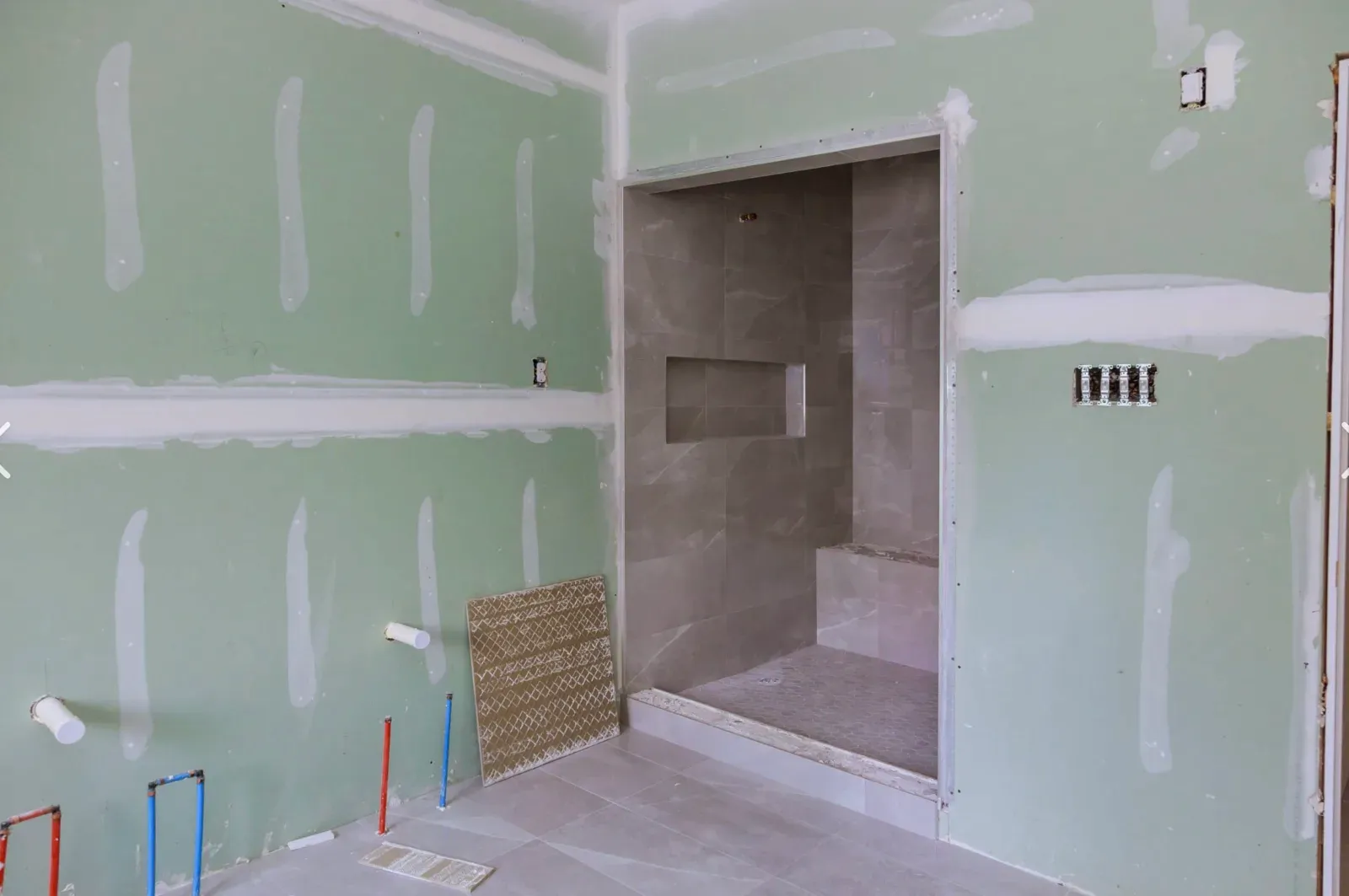
Standard gypsum board was never designed for sustained humidity exposure, and Stamford’s Long Island Sound coastline gives certain neighborhoods more of it than the rest of the city. Shippan Point and The Cove sit close enough to the water that salt air and elevated ambient humidity work on building materials year-round, not just during a storm event. In a bathroom or laundry room with standard board and a marginal exhaust fan, that combination shows up as a paper facing that starts feeding mold growth long before anyone notices a leak, simply because the paper stays damp longer than it should after every shower. Mold-resistant board changes that equation with a treated paper facing that resists the mold growth standard board’s paper actively feeds, and a core formulated to tolerate humidity cycling without breaking down the way standard gypsum does.
Stamford Elite Drywall specifies this board by the room’s actual exposure, not by habit. A powder room with good ventilation and no direct water contact may not need the upgrade at all; a laundry room with a vented dryer running daily humidity into the space, or a coastal-facing bathroom with a window that stays shut most of the winter, benefits from it every time. The cost difference between standard and mold-resistant board is modest, and it’s a much smaller number than removing and replacing a wall that failed within a few years of installation.
The board matters, but it isn’t the whole answer
Mold-resistant board is not a substitute for a working exhaust fan, and it isn’t waterproof. A shower or tub surround needs cement board like Durock behind the tile, paired with a waterproofing membrane like RedGard, because direct water contact is a fundamentally different exposure than ambient humidity. Confusing the two products is a common and expensive mistake: mold-resistant board installed directly behind tile in a shower will eventually fail because it was never rated for standing water contact, while cement board used on a general bathroom wall where mold-resistant board would have sufficed adds unnecessary cost and labor.
Ventilation is the other half of the equation Stamford Elite Drywall raises with every client, because even the best board loses the fight against a bathroom with an undersized or nonfunctional exhaust fan. Basement finishing projects carry a similar version of this conversation: moisture-resistant board handles occasional dampness from a foundation wall far better than standard board, but it isn’t a fix for an active water intrusion problem, which needs to be resolved at the source before any drywall goes up. Getting the board selection right for the specific room and its actual moisture exposure, rather than defaulting to the cheapest option everywhere, is what keeps a Stamford renovation from becoming a recurring mold conversation.
Materials & standards
Products & materials we use
- USG Mold Tough
- Gold Bond XP
- Georgia-Pacific DensArmor
- Durock
- RedGard
Standards & codes we work to
- ASTM C1396/C840
- 2022 Connecticut State Building Code (2021 IBC/IRC)
What the terms mean
- mold-resistant board
- purple board
- cement board
- waterproofing membrane
- joint compound
Options & variants
| Option | When it applies | Cost |
|---|---|---|
| Mold-resistant (purple) board | Bathrooms, laundry rooms, and general high-humidity areas | Modest cost increase over standard board |
| Cement board (Durock) | Direct tile backing in a shower or tub surround | Moderate cost, used alongside waterproofing membrane |
| Full moisture-resistant basement system | Basements with a history of dampness or proximity to the water table | Moderate cost, combines board with proper framing setup |
| Remediation and replacement of mold-affected board | Existing wall shows visible mold or water damage | Cost depends on extent of affected area |
What affects cost
- • The extent of any existing mold damage, since affected board and sometimes insulation need to be removed and disposed of properly
- • Whether the project is new construction or finishing versus remediation of an existing problem
- • Direct-to-tile applications need cement board and a waterproofing membrane, which adds a step beyond board installation alone
- • Ventilation in the room; a bathroom without adequate exhaust fan capacity will undermine even the right board choice over time
What to expect
- 1
Assessment
We check the room for existing mold, water staining, or ventilation issues that need to be addressed alongside the board.
- 2
Removal
Any compromised board is removed, with appropriate containment where mold has spread.
- 3
Framing and board
The appropriate board system goes in: mold-resistant board for general wall areas, cement board where tile is going up directly.
- 4
Taping and finishing
Materials suited to the room's moisture exposure are used for taping and finishing.
- 5
Final walkthrough
We discuss ventilation recommendations to protect the new installation going forward.
When this isn’t the right call
- If the moisture problem is coming from an active plumbing leak or roof leak that hasn't been fixed yet, that needs to be resolved first, since new board installed over an ongoing leak source will fail again.
- If the project is a full basement remodel rather than a targeted moisture-resistant board upgrade, basement drywall finishing is the better fit, and it incorporates moisture-resistant board as one of its options.
- If the wall in question also needs to be torn out entirely due to extensive prior water damage, drywall removal and demolition should happen first.
Frequently asked questions
Is mold-resistant drywall the same as waterproof drywall? +
No. Mold-resistant board, often called purple board, has a treated paper facing that resists mold growth and a core that holds up better to occasional moisture and humidity than standard board, but it isn't waterproof. Direct water contact, like inside a shower, needs cement board and a proper waterproofing membrane instead.
Do I need mold-resistant board in every bathroom, or just some? +
Any bathroom benefits from it on the general wall areas, especially with limited ventilation. Areas that get direct water exposure, like a tub surround or shower wall, need cement board rather than mold-resistant drywall regardless of the rest of the room.
My basement has occasional dampness but no visible mold. Should I still use this board? +
Yes, that's exactly the situation where moisture-resistant board earns its cost. Waiting for visible mold before switching board types means the standard drywall already installed has to be removed and replaced anyway.
How do you handle a wall that already has mold on it? +
Affected board gets removed, and depending on the extent, the framing and any insulation behind it gets inspected and addressed before new moisture-resistant board goes up. Containment during removal keeps spores from spreading to unaffected areas of the house.
Does living near Long Island Sound make my house more prone to this? +
Homes in Shippan Point, The Cove, and other coastal Stamford neighborhoods deal with more ambient humidity and salt air than homes further inland, which does accelerate wear on standard drywall in exposed rooms. It's a reasonable factor to plan for when specifying board for a renovation in those areas.